Monday, January 27, 2025

"Certain of These Balloonists" for Tuba


"Certain of These Balloonists" 

for Tuba

Bil Smith Composer

Published by LNM Editions

Link to PDF Hi-Res Score


In terms of starting a new composition, an important fact for me is that it’s not genre-specific. It doesn’t reflect back to a particular genre. And that’s what’s engaging to me about it, it’s a very speculative assumption: that one can think about producing a musical score, and making meaning, at the same time understanding that there’s no absolute and stable benchmark to rely on for the stable production of that meaning.

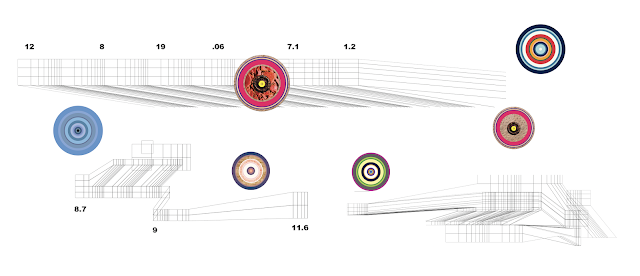
Tablature Scema - Hirst Castellani


Friday, January 17, 2025

"The Jubal Project"


Beginning late in 2022, I embarked on an ambitious project to reimagine music notation.  I realize, for some of you who know me, this does not seem like anything new coming from me.    


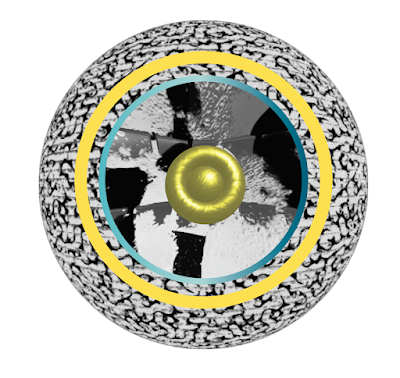
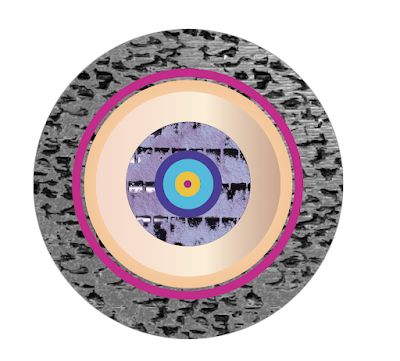
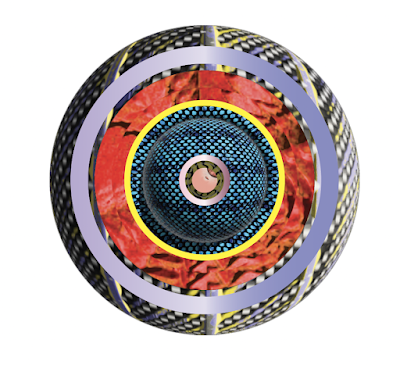
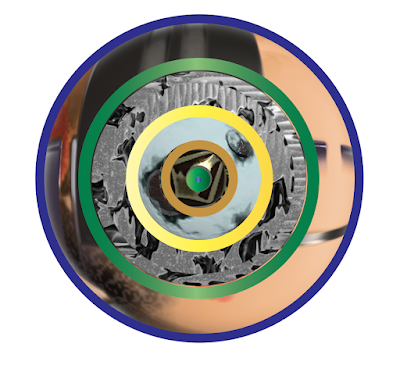
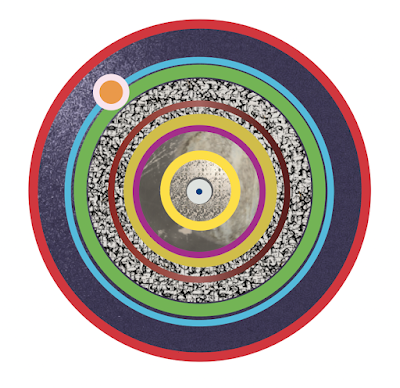
The Jubal Project" is a reckoning even for me.  It is a journey to create a massive new musical lexicon for composers and performers alike.  At the core of this lexicon is the circle; yes, the circle, not unlike the circles or ellipses found in traditional notation, however, there is a profound difference in how these new 'circles' are interpreted.  And there will be many. 


Why the circle?  The circle is a universal symbol with extensive meaning. It represents the notions of totality, wholeness, original perfection, the Self, the infinite, eternity, timelessness, all cyclic movement, God ('God is a circle whose center is everywhere and whose circumference is nowhere' (Hermes Trismegistus)). 


The impetus behind the creation of this new musical lexicon is the creation of a notation system (archetype) which is able to oscillate between indexical registrations, symbols of forces in flux, and sensory stimuli.  It is intended to be a continuous, self-vibrating region of intensities whose development avoids any orientation toward a culmination point or an external end.  


Features within this notational archetype yield aftereffects which empower the composer and performer that can be injected back into a pattern to generate multiple transformations and variants of sound creation.  This offers a specific type of experience, one that is paradoxically immersive and partial, but always highly sensual. 


As composers, our proficiency in crafting and exploiting form allows us to make, modify and deploy patterns of sound unlike those of previous generations.  The selection or creation of a pattern of notation can go a long way towards establishing a domain of sensibility for the performer. 


Why “The Jubal Project?”  It is named for Jubal who was a Biblical figure in Genesis 4:21 of the Hebrew Bible and Old Testament. Mentioned only once, he is sometimes regarded by Christians, particularly by medieval commentators, as the 'inventor of music.' 


Much more to come… 


The Jubal Project: Creating a New Musical Lexicon


The Jubal Project: Creating a New Musical Lexicon


The world of music is constantly evolving, with new technologies and techniques enabling musicians and composers to create innovative and exciting sounds. However, few projects are as ambitious as "The Jubal Project," a new musical lexicon that promises to change the way we think about notation and sound.


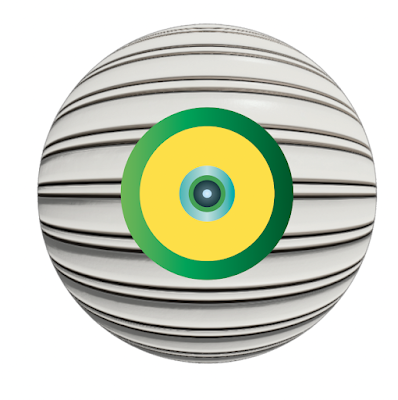
At the heart of The Jubal Project is the circle - a universal symbol with profound meaning. This new lexicon uses circles as a core element, allowing composers and performers to create complex patterns of sound that are both immersive and sensual.


So why the circle? The circle represents wholeness, totality, and original perfection, making it the ideal symbol for this new musical language. By using circles to represent sound, The Jubal Project offers a new way of thinking about musical notation, one that is both flexible and dynamic.


But the real power of The Jubal Project lies in its ability to generate multiple transformations and variants of sound creation. By creating a notation system that can oscillate between indexical registrations, symbols of forces in flux, and sensory stimuli, composers and performers are able to create a continuous, self-vibrating region of intensities. This notational archetype empowers the composer and performer, offering them a specific type of experience that is both paradoxically immersive and partial.


The Jubal Project offers a new way of thinking about music, one that is rooted in the power of form and pattern. As composers, we have the ability to craft and exploit form to create new sounds that were previously unimaginable. With The Jubal Project, we are able to establish a domain of sensibility for the performer, opening up new realms of musical expression.


In conclusion, The Jubal Project is a groundbreaking new musical lexicon that promises to change the way we think about notation and sound. By using circles as a core element, it offers composers and performers a powerful new tool for creating complex patterns of sound that are both immersive and sensual.