Thursday, October 19, 2023

Wednesday, October 18, 2023

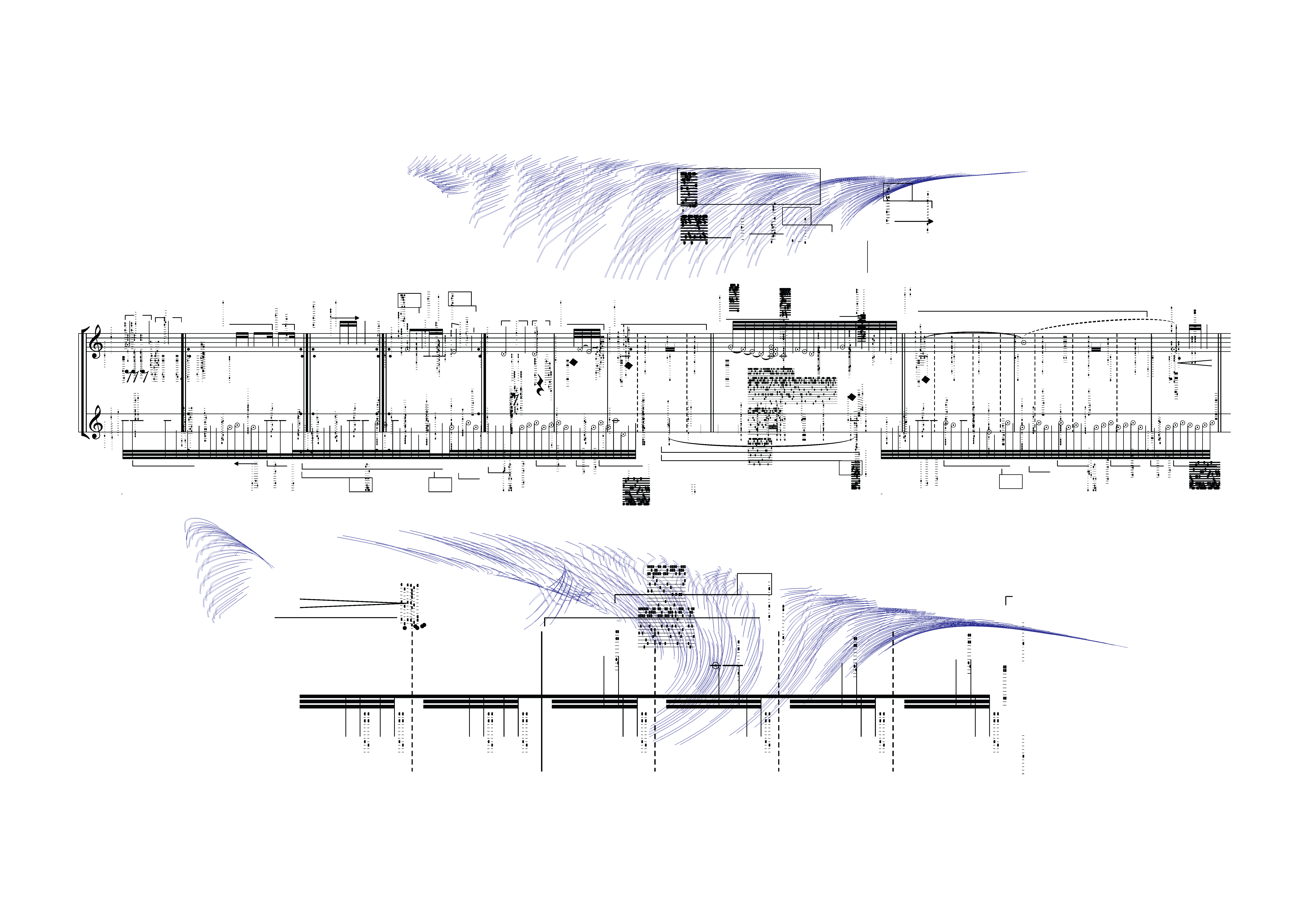
"Overpowered by Stuporous Confusion." A Fanfare for Two Trumpets


"Overpowered by Stuporous Confusion"

A Fanfare for Two Trumpets

Bil Smith Composer

Published by LNM Editions

Sunday, October 15, 2023

The Post-Conceptual Composer and Institutional Composition


The work of the post-conceptual composer is a contradiction intended to surprise both the listener and infinity. Ideas are the way a listener will refer to this surprise. The composer will state the idea as ludicrously infinite. 
Successful completions generally have been found to mitigate infinity. I predict we will see one such mitigation via Institutional Composition. This is a newly minted term meant to function as a post-conceptual commentary on infinity as well as the various institutions and assumed normalities of composing and/or a radical disarticulation of the institution of composition (radical is notationally understood in its relation to radix which means to get to the root of something). 


For instance, assumptions about the supposed aesthetic autonomy or neutrality of science fiction and fantasy are often explored as a subject in the field of literature, and are then historically and socially mapped out (i.e., ethnographically and or archaeologically) as discursive formations, then (re)framed within the context of The Infinite Library itself. 


As such, Institutional Composition seeks to make visible the historically and socially constructed boundaries between inside and outside, public and private.  Institutional Composition is often critical of the false separations often made between distinctions of taste and supposedly disinterested aesthetic judgment, and affirms that taste is an institutionally cultivated sensibility that may tend to differ according to the class, ethnic, sexual and gender backgrounds of music's audiences. 


The resulting work is meant to sound good. Sometimes the work suggests the form of the composer. I am grateful for the way a score presents itself as an autobiographical product of its creator and his/her place in the infinite. And yet, I have found this gratefulness tends to go awry in expressionist composition. 


It looks better when the score may more easily become a metric time element, a kind of objective tool that is an intrinsic part of the composer who is out to avoid subjectivity. This type of work is free even to be a belief, something that shows the size of a metric time element as representative of a belief.  The composition is representative of that belief.


Reinventing the String Quartet Tablature: A Work In Progress Bil Smith Composer


Reinventing the String Quartet Tablature: A Work In Progress

Bil Smith Composer

Score 30" X 30"

The Blank Tablature:


Details from score:


Saturday, October 14, 2023

"The Combine Score: Where Art and Notational Expression Converge"


"The Combine Score: Where Art and Notational Expression Converge"

My Compositional Combine Scores expand the canvas of communication. Composers are no longer limited to ink on paper.  We incorporate visual art, sculpture, type, photography, and a myriad of artistic disciplines into our scores, introducing a rich and dynamic visual language to music.

In the landscape of artistic innovation, the term "Combines" has carved a unique niche, much like Robert Rauschenberg's groundbreaking body of work. Coined by Jasper Johns to describe Rauschenberg's three-dimensional integration of objects into paintings, the Combine represent a captivating fusion of art and everyday life. 

Rauschenberg's Combines, initiated in 1954, revolutionized the art world by collapsing boundaries between materials, media, and disciplines. In a similar spirit, I have developed the concept of "Compositional Combines," a transformative approach where traditional notation gives way to the integration of art and three-dimensional perspectives in the articulation of musical scores.

Robert Rauschenberg's Combines are a testament to the liberating power of artistic innovation. These compositions, created between 1954 and 1964, ushered in a new era in art by defying conventional boundaries. Rauschenberg's bold approach seamlessly integrated everyday objects, from newspaper clippings to taxidermied animals, into his paintings. The result was a remarkable collapse of distinctions between the materials of artmaking and the artifacts of daily life.

Just as Rauschenberg's Combines challenged the rigid boundaries of painting and sculpture, my concept of"The Combine Score" or "Compositional Combines" seeks to redefine the traditional notational mechanisms of music. In the realm of sound, this paradigm shift invites us to explore the interplay between art, three-dimensional perspectives, and the articulation and interpretation of musical scores.

Beyond Notation: A Multidimensional Lexicon
The Compositional Combine transcends traditional notation to create a multidimensional lexicon. It embraces combustion, structural modeling, perforation, digital archetypes, typography, symbology and a wide array of expressive techniques that breathes life into score. This lexicon invites the performer to explore not just the notes but the very soul of the composition.

The core principle is the integration of visual mediums as notational devices, much like Rauschenberg's fusion of art and everyday objects. 
The result is a multisensory experience that invites the performer to engage with score in a profoundly different way. The boundaries between the visual and auditory realms blur, creating a synesthetic journey where sound is intertwined with artistic expression. Just as Rauschenberg's Combines broke down the barriers between art and everyday life, the Compositional Combine blurs the lines between art and sound.

Much like Rauschenberg's taxidermied animals and diverse objects added depth to his paintings, the three-dimensional aspects of the score introduce a sense of depth and immersion. This approach not only challenges the boundaries of traditional music but also invites performers to explore score interpretation as a multidimensional experience.

The Compositional Combine does not seek to obliterate traditional notation. It is, instead, an evolution that enriches and expands upon it. It maintains a profound respect for music's historical significance while embracing innovation and redefinition. 

"Windless Hall". The Tactile Score. For One or Two Percussionists.


"WINDLESS HALL OF UNKNOWN APPARATUS" 

FOR ONE OR TWO PERCUSSIONISTS. 

Recording on Laboratorie New Music label, Premiere Recording: Darmstadt, 2012

THE IMAGE GALLERY:


The performer may choose up to fourteen separate percussion instruments to use throughout the performance. Whatever number of instruments the performer chooses, he/she must engage all instruments throughout the performance with frequency of use determined by the performer. It would therefore be feasible that an instrument be stricken but once (and potentially imperceptibly inaudible).

The performer may arrange the boxes in any manner seen fit. They may remain inside the large box or removed from the large box and placed at the discretion of the performer. A box may be turned, flipped or relocated at any time during the performance.

The materials represent consistencies to be aspired to during the piece. In the colophon, each material is defined and while the performer will create their own personal syntacticon based on these performance notes (found in the colophon), the tactile representation of the materials as they appear and reappear should remain consistent. Here the boxes and imagery profusely expand the vocabulary nurtured by symbolic masks, autobiographical events, and references to painting styles and spontaneous thoughts.

An innate inclination toward the geometric as is the overwhelmingly panoramic surface of the small scale painting found as hidden gems in the small reliefs.


PHLASH Compositions: "Sea Circus Syndrome" for C Trumpet and String Quartet. Bil Smith Composer


Sea Circus Syndrome


"Sea Circus Syndrome" 

for C Trumpet and String Quartet.  

Bil Smith Composer

"Sea Circus Syndrome" orchestrated for C Trumpet and a String Quartet, is a testament to the essence of a "PHLASH Composition," a spectrum of work characterized by an abbreviated modality.


The PHLASH Composition


This enigmatic term signifies a musical piece that is notably brief, yet possesses the uncanny ability to plunge its listeners into an alternative realm. Such compositions are designed to be paradoxical, enabling the listener to traverse through a myriad of emotions, thoughts, and contemplations within an astoundingly short duration.


Thursday, October 12, 2023

Onto The Asphalt Verge. For String Quartet.


"Onto The Asphalt Verge"

For String Quartet

Bil Smith Composer


Commissioned by Fleury SA and
The Carlos Alberto Iwata Marinelli Family Trust

Published by LNM Editions