Thursday, October 31, 2024

Preview of New Commissioned Compositions for 2023: Works in Progress for Solo Flute


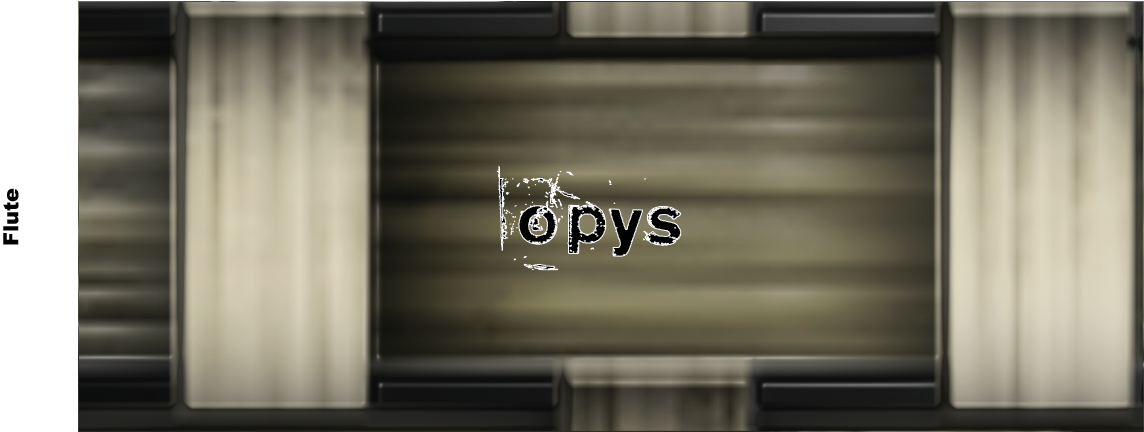
Preview of new score for solo Flute inspired by Piero Manzoni, Fortunato Depero, Aldo Tambellini, Mimmo Rotella and the Arte Povera movement.  This tablature was born from a need for separation from the traditional.  This notation in no way relates to aesthetic fantasies or a quest for fashionable effects, but concern compositional facts that imply an entirely new kind of musical interpretation.

In this work as many of my compositions, the way the visual elements act upon each other is like a molecular process that combines images of transformations that occur in the real world: images of mathematical or logical transformations; multiplication of visual representations, affiliations between pairs of divergent materials; existence and absence of materials and of tactile adaptations.

I do not suggest that the art of composition is really a science of measurement and precision. I do think that any work demands precision of judgment.   It is precision that informs both the performer and the listener.


"Dimidius" for Solo Piano


"Dimidius"

For Piano

Bil Smith Composer

Commissioned by Scapa Group PLC

Utilizing an encapsulated tranche system, the notation for "Dimidius" segments motifs through the strategic implementation of bounding boxes. This approach elucidates the nuanced interplay of shifting coalitions of forms as they manifest in the performer's interpretations across temporal shifts.


Through a series of concepts, graphic protocols, and notations, "Dimidius" serves as a visual framework, delineating distinct motifs and shifting coalitions of forms and their perceptual manifestations over time. The use of bounding boxes as a notational device underscores the fluidity of perception and the multifaceted nature of artistic expression, highlighting the inherent dynamism of the compositional process.


Saturday, October 26, 2024

"Tourminium". For Piano


"Imperial Astronomical Institute" for Bass Clarinet, Tuba & Piccolo.


"Imperial Astronomical Institute" for Bass Clarinet, Tuba & Piccolo. Bil Smith Composer Page 1 of the score.

Commissioned by Xi'an Aircraft Industrial Corporation for the 10th anniversary of AVIC I, June, 2009.

Friday, October 25, 2024

"Crater 32" For Soprano Voice A WET (Words, Events and Text) Score Commissioned by BNP Paribas


"Crater 32"


For Soprano Voice


A WET (Words, Events and Text) Score


Commissioned by BNP Paribas


For the opening of the BNP Paribas Open


Indian Wells, CA


"Sequential Dukes" for Flute


"Sequential Dukes" 

for Flute

Bil Smith Composer

The score for Sequential Dukes exists as a paradox in transparent, unobtrusive form, its very design appearing unburdened by any imposition on the music. Its notation, a choreography of notes, lines, dots, spheres and rests, invites us into an ambiguous space where spatial clarity and tonal density operate not as contradictions but as continuities of one another. This work seems to question not only the nature of music as performance but also the ontology of sound and notation as separate entities and as parts of a whole.

In considering the nature of this score, one must first confront the essential dualism it suggests between the appearance of simplicity and the layered complexity it calls for in interpretation. Thomas Nagel's concept of what it is like—the subjective quality of an experience—becomes relevant here, for "Sequential Dukes" invites the musician into an unusual role as both a conveyor of music and as an interpreter of silence, a negotiator of both the structured and the unformed. The question becomes not only what it is like to play Sequential Dukes but what it is like to inhabit its notation, which gestures as much toward its silences as it does to its sounds.

The score of Sequential Dukes might seem to guide the player directly, suggesting a transparent clarity in its notation that emphasizes spatial arrangement, yet this clarity also embodies an intentional ambiguity. Each note, each sphere, and every space between marks is a placeholder not merely for sound but for the absence of it—for that quality that is both distinctly part of the music and yet simultaneously outside it. In this, the piece invokes an objectivity of form while simultaneously demanding subjective interpretation, as each flutist must find their path within the score’s spaces.

The philosophical exploration of the tension between objective and subjective perspectives is vividly relevant here. Just as Nagel argued that the mind cannot be reduced to physical processes alone, the notation on the page cannot be reduced merely to a sequence of sounds. They invite the musician to enter into a space where the boundaries between presence and absence, sound and silence, are blurred. The player must confront not only the score as it exists in a physical form but as it exists in a mental, interpretive space.

"Sequential Dukes" opens a dialogue between transparency and opacity in its form, drawing the performer to contemplate what it means to create sound in relation to a score that seems, paradoxically, transparent yet opaque. The notational clarity here is striking, but this clarity does not simplify; rather, it expands the responsibility of the performer to construct meaning from what is deliberately left unresolved. Nagel’s sense of aesthetic distance—the gap between the external object and the subjective experience of it—suggests that, for the performer, the act of engaging with "Sequential Dukes" is akin to an exploration of the meaning of each note, with each sound representing not just itself but also its space within the totality of the composition.

This aesthetic distance allows for a kind of ethical engagement between the performer and the work, where each sound is not imposed but rather proposed as part of a wider landscape of interpretation. To play Sequential Dukes is not merely to reproduce the notes but to embody the spaces between them—to enter into a creative relationship with the score’s sparse notation, which invites the player to bring their own subjectivity into play without overpowering the work’s form.

Thursday, October 24, 2024

Richter and Fluxus Inspired Score for Contrabass Clarinet


My score for Solo Contrabass Clarinet, inspired by both Gerhard Richter's "Strips" paintings and Fluxus practices, offers a unique synthesis of visual art, randomness, traditional notation, and intermedia. It challenges the very notion of traditional musical composition, blurring the boundaries between auditory experience and visual interpretation, extending into a realm where technology, pictorial reflection, and radical artistic opposition converge.


Gerhard Richter’s Strips and Pictorial Expansion


Richter’s "Strips" paintings, which emerge from slicing his abstract canvases into horizontal strips and then reassembling them into new configurations, serve as the conceptual bedrock for the score. The "Strips" paintings are not mere reproductions but are fusions of past painterly gestures and digital manipulation. They acknowledge the historical baggage of painting, while actively engaging with technology's influence, a kind of digital mourning for the traditional canvas, transformed through modern tools.


The inspiration from Richter’s work can be seen as a metaphor for the digital fragmentation of experiences: the sonic and visual worlds splintered and yet reorganized into something unfamiliar, but still deeply tied to their origins. Similarly, in this score, the musical ideas are deliberately fragmented—dissected and reassembled—inviting the performer and listener to experience sonic "strips" that are constantly recombining.


The score’s format, consisting of individual cards housed within a Fluxus-like box, mirrors this fractured yet cohesive approach. Each card, akin to Richter’s strips, provides a segment of sound, a piece of the overall structure that the performer can reassemble, much like an abstract collage of sonic moments. These moments defy linearity, embracing the Fluxus ethos of randomness and recombination.


Fluxus and the Intermedia Approach


The Fluxus movement, as described by Dick Higgins in his coining of the term "intermedia," sought to dissolve the boundaries between different forms of art—painting, music, performance, and even life itself. The Fluxus artists were deeply involved in using everyday objects, exploring chance, and breaking down the formal constraints that separated one genre from another. In this composition, the score’s DIY aesthetic, where the performer must physically interact with the cards, directly engages with Fluxus' spirit of anti-commercialism, collaboration, and experimentation.


Found materials and randomness, hallmarks of Fluxus compositions, are central to the performance. Here, the cards act as modular components—no single "right" way exists to perform the piece. The contrabass clarinet, with its broad tonal palette and capacity for extreme textures, lends itself to this improvisational style. The performer, much like an intermedia artist, must become a collaborator with the score—interpreting, organizing, and performing it with creative agency.


Technology, Pictorial Mourning, and Resistance


The idea of pictorial mourning—mourning the loss of the traditional canvas in the digital age—extends into the sonic realm in this score. The score’s use of Richter’s fragmented approach can be seen as an act of defiance against the totalizing claims of technology over art, in this case, over musical notation. Just as Richter’s "Strips" reflect the impact of digital technology on painting, this score reflects how digital culture has transformed musical composition and performance.


Here, the score does not regress into nostalgia for classical musical forms but instead confronts technology by using it to further challenge and subvert traditional musical expectations. Each card in the Fluxus box is an "act of mourning" for the disappearing boundary between sonic experience and technological mediation, yet also a celebration of the possibilities opened up by these very technologies.


The juxtaposition of quasi-traditional Western notation with photorealism also serves to reflect this confrontation. Photorealist notation, in this case, rejects the usual intent of notation to represent a world of feeling or motion and instead mirrors how a camera would capture the world—cold, detached, and exact. This detachment underscores the idea that music, like painting, has evolved under the shadow of technology and is now seen through a lens of distillation, a “camera’s” version of what we once perceived as deeply human and emotional.


The Performer’s Role and the Idea of Agency


The performer becomes more than just an interpreter—they are an active creator, engaging with the score as a dynamic, malleable construct. The "strip-like" fragments of notation and their reassembling reflect the performer's agency, much like a Fluxus artist assembling found objects into new configurations. The contrabass clarinetist, in this new score, becomes similarly empowered. They take on the role of both performer and curator, crafting a narrative from fragmented, non-linear parts.


Each card, like Richter’s strips, could be seen as a miniaturized, self-contained world. When assembled, the cards form an expansive and unpredictable sonic landscape, reflecting the performer's choices. This reciprocal oscillation between performer and notation forms the core of the piece—creating a living dialogue between sound, visual art, and performative intent.



Quattro Iambe Per Amare. For Two Wind Instruments.


Quattro Iambe Per Amare. 

For Two Wind Instruments.

Bil Smith Composer

2015

Whole nOte


Tuesday, October 22, 2024

The New Compositional Lexicon: "Bevoluction"


Bevoluction (noun): The spontaneous emergence of multiple layers of evolving notation that simultaneously interact, collide, and morph within a compositional framework, rendering the score as a living organism. In Bevoluction, the composer instigates a system of self-generating musical symbols, where visual, tactile, and sonic elements continuously reconfigure themselves, defying fixed representation. As the score progresses, it experiences an evolution of form, not bound by static intentions but driven by the perpetual flux of alternative notational methods such as typography, sculptural forms, combustion, and abstract iconography.

"Power Guardian" for B Flat Inox Trumpet


"Tropics of the Mind Threat" for Solo Flute


"Tropics of the Mind Threat" 

for Solo Flute

Bil Smith Composer

30" X 30"

Published by LNM Editions

Iconographic Notation and Narrative Constructs


The notation in this score transcends the traditional symbology of music. It stitches together storylines, collects artifacts of thought, and spawns imaginative terrains. The flautist, as they interpret the score, is not merely playing notes but is invited to traverse these dense events with resolve, to engage with the score's iconographic depth, and to bring to life the narratives embedded within the musical text.


A Proactive Stance Against Stagnation


"Tropics of the Mind Threat" challenges the flautist to adopt a proactive stance against the static nature of conventional performance. It calls for a resonant action from the flautist, urging them to exercise their performance sensibilities to anticipate and engage with the contextual dynamism presented by the score. This piece embodies locational schizophrenia—a reflection of the fragmented, multifaceted world we inhabit. The flautist must navigate these complexities, making interpretative choices that honor the fluidity and volatility of the piece's inherent nature.


The Abstraction of Places and Objects


The degree of abstraction present in the iconographical notational system invites wonder and introspection. The places and objects within the score are not merely notes and rhythms; they are codes and terms of reference that hold a wealth of spatial and iconographic meaning. These elements are so densely packed with intention and significance that they require a temporal inspection—a dedicated moment of reflection that stretches beyond the immediate act of performance.


To fully engage with "Tropics of the Mind Threat," the flautist must embrace a temporal inspection that exceeds their own temporal reach.


Saturday, October 19, 2024

"Resistance and Assimilation" for Tuba


The score for "Resistance and Assimilation" for Tuba occupies a space that isn’t so much notated as it is constructed, built from a fabrication of notational elements that channel the same energy as the crushed, shaped, and formed metal sculptures of John Chamberlain. It’s a design language, but not one based in the flatness of traditional notation; rather, it’s a topographical architecture, a space where the musical structure is folded, distorted, and reassembled in such a way that the score itself becomes a site of provocation and exploration.


At the core of this composition is a material tension, not unlike the raw materials of architecture, where steel and concrete resist yet coexist. The score doesn’t aim for the comfort of linearity or the predictability of convention. Instead, it presents a topography of resistance—a landscape of notational archetypes that challenge our assumptions about form, about the very nature of representation. It poses novel questions of our own conventionality, but not through direct confrontation. Rather, it teases, it plays with the edges of what we know, asking us to engage with it as a living, breathing artifact, not a static set of instructions.


This brings us to the score's spatial intelligence, which, much like architecture, is built upon the understanding that space is not neutral. In architecture, space is political, cultural, social—an active participant in shaping the way we live and move. The score for "Resistance and Assimilation" taps into this same idea but within the domain of music. The irregularities and distortions in the score's visual landscape force the performer to navigate through it, to make decisions in real time, much as an architect must adapt to the complex and often contradictory forces of a building site. There is no single, dominant reading of the score, just as there is no single, ideal way to inhabit a building. It resists simplicity in favor of a more layered, fragmented experience—a conversation between structure and interpretation.


What’s most challenging about the score is how it provokes domesticated notions of coexistence. In architecture, the idea of coexistence is often domesticated by function, efficiency, and utility. Buildings must serve, they must shelter, they must conform. But here, the score rejects that. It refuses to be domesticated by tradition or functionality. Instead, it lives in a state of relentless provocation, where each notational element—each bend, each curve, each broken line—becomes an opportunity to rethink the very coexistence of sound and space. The score isn’t just a tool for generating music, but a commentary on the act of creation itself, on the ways we shape and are shaped by the forces of our environments.


There is a rawness to the score’s fabrication, much like the exposed structural elements of a building that deliberately refuse to hide behind walls or facades. The materiality of the score is front and center. You see the labor in it, the way it resists polish and refinement in favor of something more honest, more immediate. The alternate compositional intelligence at work here is not about smoothness or resolution, but about the dynamic interplay of elements that resist easy categorization. It’s a score that forces engagement, that demands to be read as a living artifact of performance, not a finished product.


Ultimately, the score for "Resistance and Assimilation" doesn’t settle. It doesn’t offer a place of repose. Instead, it positions itself as an active participant in the tension between forces—between tradition and innovation, between resistance and assimilation. It’s a structure that both shapes and is shaped, constantly in flux, constantly pushing against the boundaries of what we expect from a score, much like the buildings that challenge our assumptions about space, function, and form. It’s architecture for the ears, a site of dynamic interaction, and above all, a provocation to think differently about the spaces—both sonic and physical—that we inhabit.


Tuesday, October 15, 2024

"Wolad" Trumpet Fanfare Four

"Wolad" 

Trumpet Fanfare Four

A WET Score.  Words, Events, Texts.

Bil Smith Composer

Commissioned For The Opening of 56 Leonard St.

A Herzog & de Meuron Project